To view this press release as a word file, click here
To view this press release as a PDF file, click here
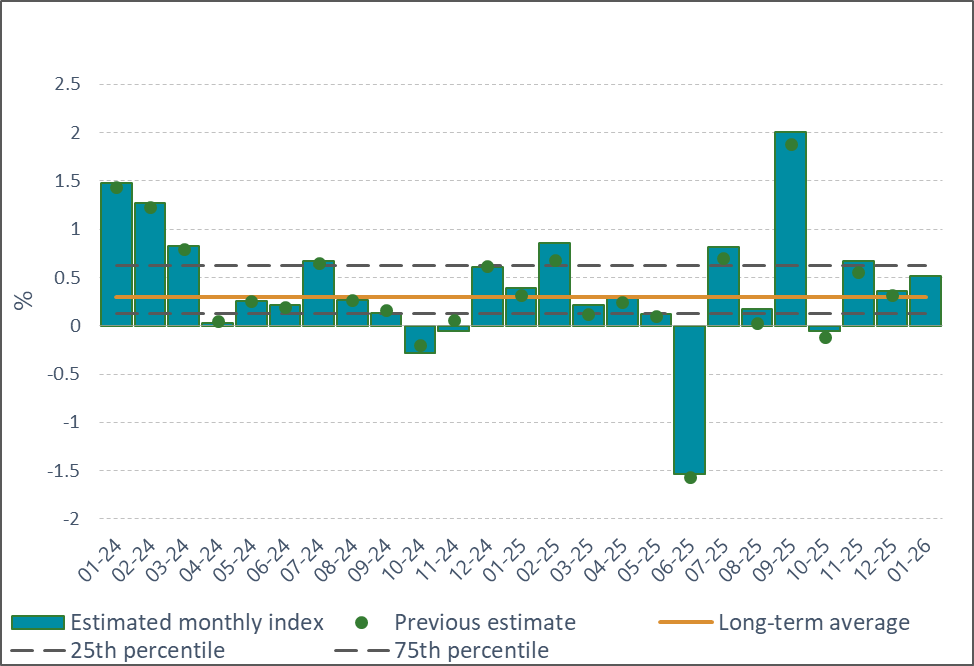
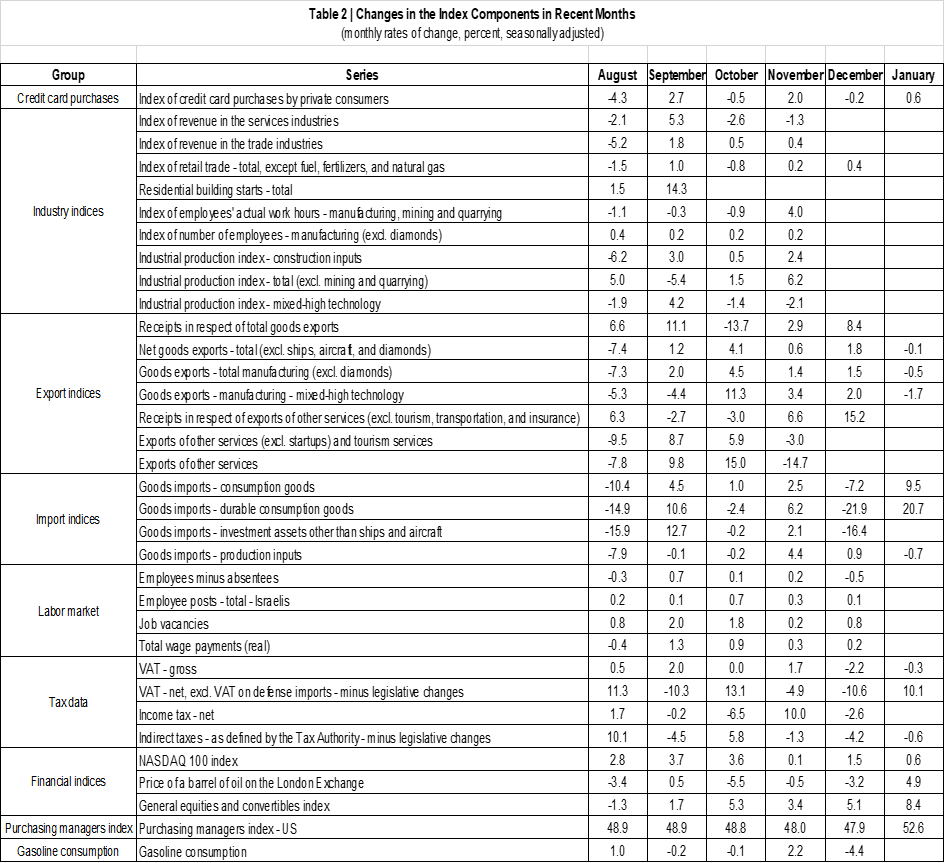
The monthly Index of Economic Activity[1] increased by 0.5 percent in January. The index this month reflects the average monthly growth estimate for the three months from November 2025 to January 2026. The Index was positively influenced by data on credit card purchases in January, trade industry revenue and Industrial Production Index data for November, retail trade index data for November and December, and goods import and financial index data for January. In contrast, figures for actual employment and for gasoline consumption in December, net indirect tax and VAT receipts in December and January, and goods exports in January moderated the increase in the index (Tables 1 and 2).
The pace of increase of the index is higher than the long-term growth trend (about 0.3 percent).
The Index for recent months was revised upward with the completion of data that were previously missing, as well as due to an upward revision of actual GDP data for the third quarter of 2025.
Figure 1 presents the Index data over the past two years. Table 1 presents the contributions of the Index’s components to the overall estimate and revisions to the Index, and Table 2 presents the monthly rate of change in the Index’s components.
FIGURE 1: The Monthly Index of Economic Activity
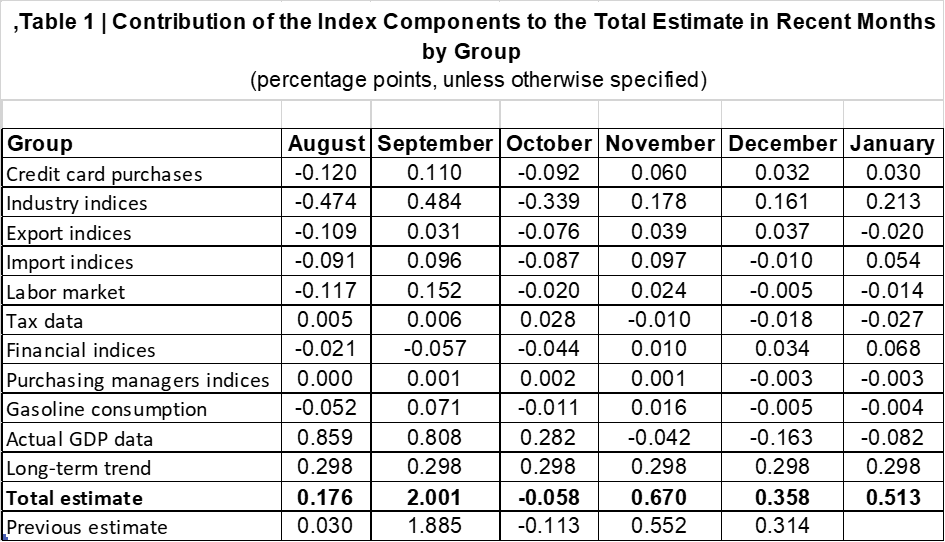
* The table presents the contribution of each group of components in the monthly index, such that the monthly estimate constitutes the sum of the contributions of each of the components detailed in the table. Some of the raw data influence the monthly estimate with a lag or influence the estimates of several months.
[1] The monthly Index of Economic Activity reflects the three-month average of the estimated monthly growth of GDP. The estimate is based on a model developed at the Bank of Israel (Ginker and Suhoy, 2021).